
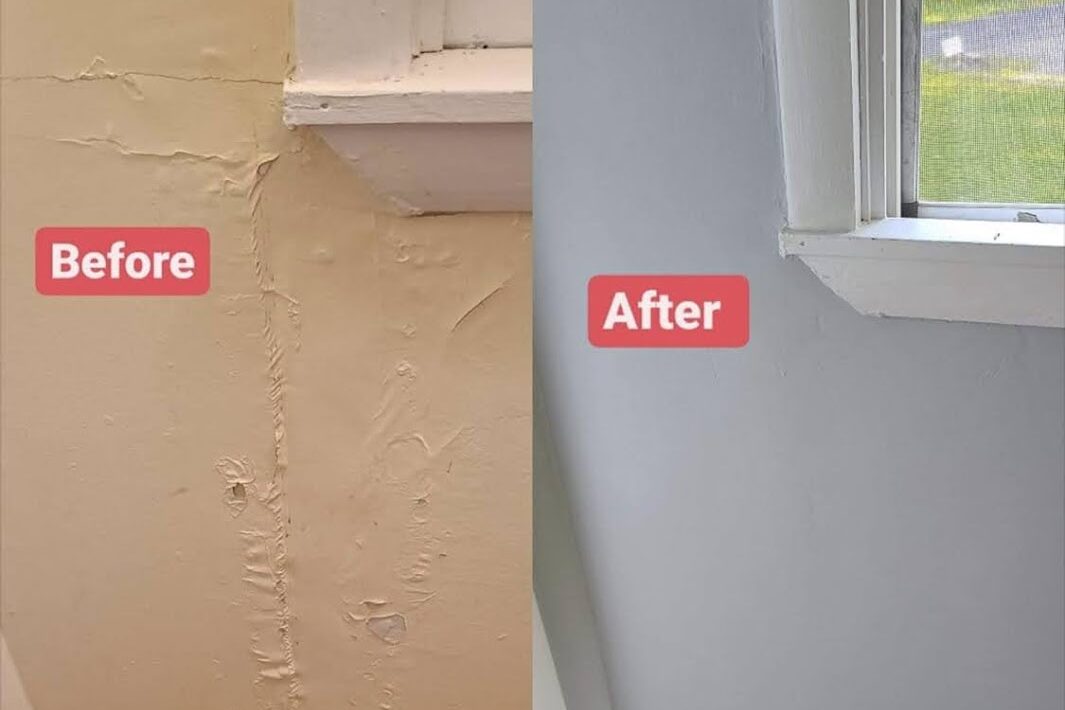
Sheetrock is simply USG Corporation’s brand name for gypsum drywall — one of the most recognized brands in construction. When people search “sheetrock repair,” they mean exactly the same thing as drywall repair: patching holes, fixing cracks, and finishing damaged sections of gypsum board walls or ceilings. This guide covers every Sheetrock repair scenario with the same techniques professionals use.
Sheetrock vs. Drywall: Are They Different?
No — Sheetrock is just a brand name, like Kleenex for tissues. USG’s Sheetrock brand is the most widely used drywall in the United States, but drywall from other manufacturers (National Gypsum, CertainTeed, Georgia-Pacific) is identical in composition and repair method. All use the same joint compounds, tapes, and finishing techniques.
Common Sheetrock Repair Scenarios
| Damage Type | Repair Method | DIY Difficulty | Pro Cost Range |
|---|---|---|---|
| Nail/screw holes | Spackle, sand, prime, paint | Easy | Included in touch-up visit |
| Small holes (1/2″–2″) | Mesh patch + 2 coats compound | Easy | $75–$150 |
| Medium holes (2″–6″) | Mesh patch kit + 3 coats | Moderate | $125–$250 |
| Large holes (6″+) | California patch or backing + new drywall | Advanced | $200–$400 |
| Hairline cracks | Fiberglass tape + compound | Moderate | $100–$200/crack |
| Corner bead damage | Replace metal/vinyl bead + compound | Moderate | $100–$250/corner |
| Water-damaged Sheetrock | Remove, dry, replace section | Advanced | $250–$600+ |
| Textured ceiling/wall repair | Match existing texture + paint | Advanced | $150–$350 |
The California Patch Method for Sheetrock
The California patch (also called a butterfly patch or self-backing patch) is the neatest way to repair medium holes without wood backing. Here’s how it works:
- Cut a piece of drywall about 3 inches larger than the hole on all sides.
- Score the back of the patch piece to remove the gypsum core, leaving just the face paper extending 1.5″ on all four sides.
- Hold the patch over the hole and trace the gypsum core portion.
- Cut the hole in the wall to match that inner traced area.
- Insert the patch — the gypsum fills the hole and the paper “wings” lay flat on the surrounding wall surface.
- Embed the paper wings with joint compound and feather out smoothly.
- Apply two more coats, sand, prime, paint.
Matching Texture on Sheetrock Repairs
The hardest part of any Sheetrock repair is matching existing wall texture. Chicago homes commonly have these texture types:
- Orange peel — Subtle bumpy texture applied with a hopper gun. Replicate with aerosol orange peel texture spray for small areas.
- Knockdown — Flat spots with slight ridges. Apply compound with a wide knife, let partially dry, then knock down with a damp knife.
- Smooth/flat — The most forgiving for small repairs. Three coats of compound, fine sanding, and good primer.
- Popcorn ceiling — Chicago older homes frequently have this. Matching it requires the same aggregate and spray equipment. For small areas, aerosol popcorn texture comes close.
Need Sheetrock Repair in Chicago?
Chicago Handyman repairs Sheetrock damage of all sizes throughout Chicago and suburbs — from nail holes to full sheet replacement. We match existing textures and leave seamless repairs you won’t be able to find.
More Drywall Repair Guides
- How to Patch a Hole in Drywall — Step-by-step for all hole sizes
- How Long Does Drywall Mud Take to Dry?
- Quick Fixes for Drywall Holes and Cracks
- Drywall Screw Guide